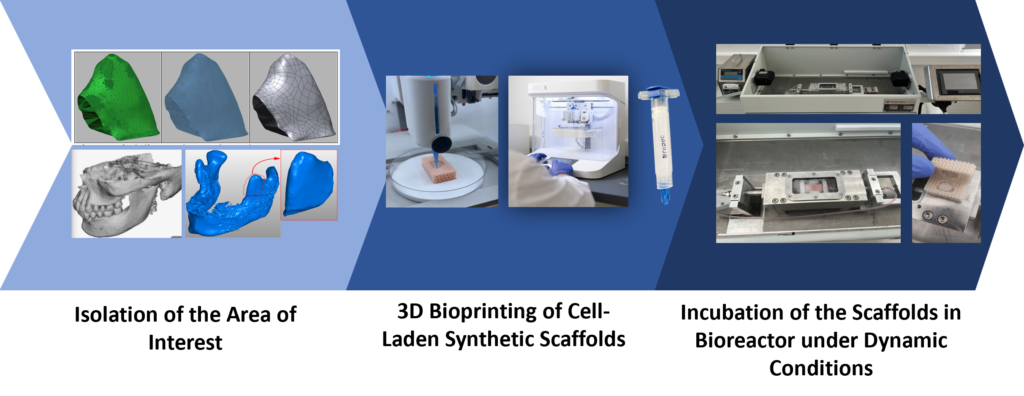
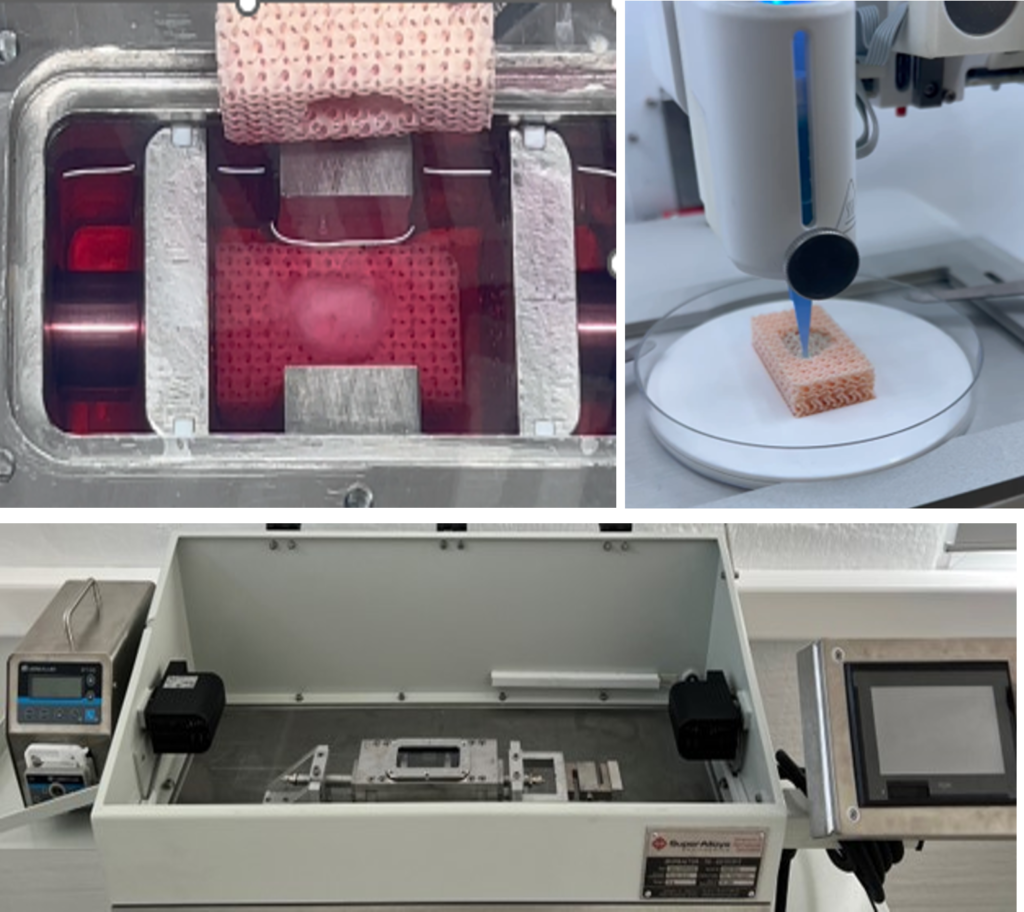
The first step in the implementation of OsteoFit involves creating a printed matrix of the model to be used for the production of the composite implant. A clinical dataset utilizing a 3D imaging technique will be chosen and utilized to generate a three-dimensional model incorporating specific characteristics of the composite implant, such as nutrient flow channels and stress transfer features. This computational model will analyze the flow of nutrients using computer fluid dynamics (CFD) and simulate normal stresses using finite elements (FEM). The simulation will be based on the mechanical properties described in the technical characteristics of the bio-compatible resins that will be utilized. The model will be fabricated using biomaterials to produce a mold with high-resolution. It will then be assessed for its flow field and stresses, as well as its in vitro biocompatibility. Ultimately, the outcomes of the effort will be disseminated through publications presented at conferences. The bioreactor plays a crucial role in the mechanical and biological maturation of the composite implant.
Results
OSTEOFIT Project has the bellow outcomes:
Focuses on creating bioinks for bone tissue engineering.
Develops a bioreactor system for dynamic cell culture simulation.
Incubates synthetic scaffolds in the bioreactor, enhancing cell proliferation rate.
Uses mechanical stimulation and in-vitro incubation of synthetic scaffolds.
Supports complete sterilization of cell incubation setup in the bioreactor chamber.
Project Information
Acronym: OsteoFit
Code: Τ2ΕΔΚ – 03546
Duration: 37 months (2020 – 2024)
Project Coordinator
Dr. Varvara Karagkiozaki
BL Nanobiomed, P.C., 57001
20th Km road of Thessaloniki Tagarades, Thessaloniki, Greece
Η εργασία υλοποιήθηκε στο πλαίσιο της Δράσης ΕΡΕΥΝΩ – ΔΗΜΙΟΥΡΓΩ – ΚΑΙΝΟΤΟΜΩ συγχρηματοδοτήθηκε από το Ευρωπαϊκό Ταμείο Περιφερειακής Ανάπτυξης (ΕΤΠΑ) της Ευρωπαϊκής Ένωσης και εθνικούς πόρους μέσω του Ε.Π. Ανταγωνιστικότητα, Επιχειρηματικότητα & Καινοτομία (ΕΠΑνΕΚ) (κωδικός έργου: Τ2ΕΔΚ-03546)
Acknowledgment: This research has been co‐financed by the European Regional Development Fund of the European Union and Greek national funds through the Operational Program Competitiveness, Entrepreneurship and Innovation, under the call RESEARCH – CREATE – INNOVATE (project code:Τ2ΕΔΚ-03546)